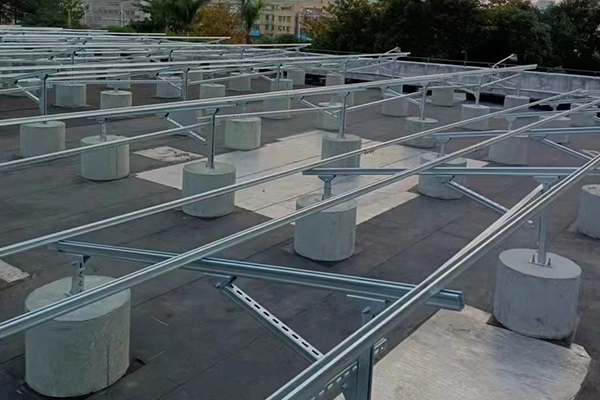
Flat roof solar racking is a core component for low-slope commercial and industrial solar projects, and the best systems balance structural safety, roof protection, installation speed and long-term performance. Unlike pitched roof mounts, flat roof racking must withstand strong wind uplift while protecting waterproof membranes from damage.
Ballasted non-penetrating racking stands out as the most popular option for most flat roof projects. Made from lightweight corrosion-resistant aluminum alloy, these modular frames rest on protective rubber pads and use concrete ballast blocks to hold the array stable without drilling holes. This design removes the biggest risk of flat roof solar installation: water leakage from penetrations, and keeps the original roof warranty valid. Pre-assembled parts cut field labour time, and adjustable tilt angles help maximize solar output according to local latitude.
For high-wind regions or buildings with limited load capacity, hybrid or minimally penetrating racking offers a safer alternative. It combines limited anchor points with partial ballast, reducing extra dead load while meeting strict wind code requirements such as ASCE 7. Top-tier racking products are fully certified, with aerodynamic shapes that lower wind lift and reduce required ballast weight.
Compatibility is another key mark of quality. The best racking works with most standard solar modules and all common flat roof surfaces, including TPO, PVC and concrete decks. It also allows flexible layout to preserve roof drainage paths and maintenance access.
When selecting flat roof solar racking, buyers should review structural reports, material lifespan and supplier warranty. A well-selected racking system protects the roof, cuts maintenance costs and supports stable power generation for 25 years or longer, delivering solid returns for commercial solar investors.