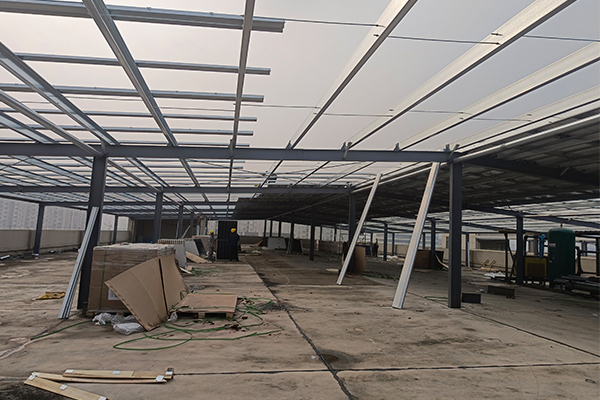
BIPV mounting systems differ greatly from conventional racking for rooftop solar panels. Rather than serving only as a support frame added onto finished roofs, these structures become an essential part of the building envelope, combining structural safety, waterproof sealing and solar module fixation in one unified solution.
Most BIPV mounting frameworks adopt lightweight anodized aluminium alloy paired with stainless steel fasteners. This material choice delivers high corrosion resistance and long service life, matching the 25‑plus‑year performance warranty of PV modules. Engineers design built‑in drainage channels, elastic gaskets and overlapping flashing details to stop rainwater penetration, a critical requirement for roof and facade BIPV applications. Ventilation gaps reserved between modules and substrate also lower operating temperatures of solar cells and stabilise power output.
These mounting solutions support flexible layouts on pitched roofs, flat rooftops and curtain walls. Architects can select hidden clamps and custom surface finishes to achieve a neat, seamless visual effect, removing the bulky look of traditional solar racks. Since BIPV mounting replaces ordinary waterproof or cladding materials, it cuts separate construction material costs for new buildings.
Nevertheless, BIPV mounting requires early coordination at the architectural design stage. Load calculation, thermal expansion allowance and future maintenance access must all be considered. As green building codes develop globally, reliable BIPV mounting systems will remain a core enabler for zero‑energy buildings, bridging solar power generation and modern architectural aesthetics.