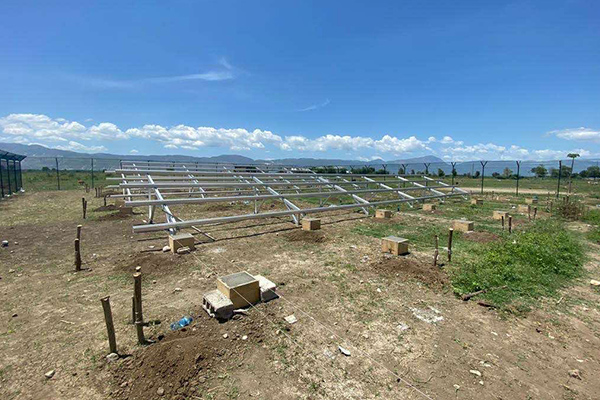
Solar panel ground mounting systems have become a cornerstone of large-scale renewable energy projects, offering a versatile and high-performance alternative to rooftop installations. Designed to secure solar panels on open land, these systems leverage optimal positioning and structural stability to maximize energy production, making them ideal for commercial solar farms, industrial facilities, and utility-scale projects worldwide.
Composed of durable materials like aluminum or galvanized steel, ground mounting systems feature adjustable frames that allow precise alignment of solar panels with the sun’s path. Fixed-tilt designs offer cost-effectiveness for consistent sunlight areas, while single-axis or dual-axis tracking systems enhance efficiency by following solar movement, boosting energy output by 15-30% compared to fixed setups. Their robust structure withstands harsh weather—from strong winds to heavy snow—ensuring long-term reliability with minimal maintenance.
A key advantage is flexibility in site selection and scalability. Unlike rooftop systems limited by space and structural capacity, ground mounts can be installed on unused land, brownfields, or agricultural areas (agrivoltaics), adapting to varying terrains. They support easy expansion, allowing project owners to add panels as energy demands grow. Additionally, ground-mounted arrays simplify maintenance: panels are accessible at waist height, reducing inspection and cleaning costs while minimizing safety risks.
Aligning with global sustainability goals, these systems drive the transition to clean energy by optimizing solar efficiency. They reduce reliance on fossil fuels, lower carbon emissions, and offer long-term cost savings through reduced electricity bills and potential government incentives. As solar technology advances and land-use strategies evolve, ground mounting systems remain a vital solution, empowering businesses and communities to harness solar energy’s full potential efficiently and sustainably.