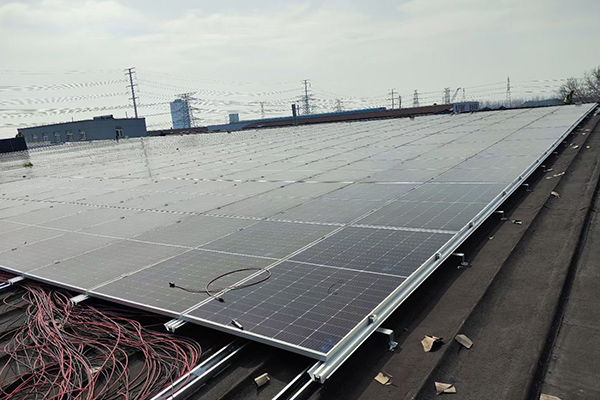
Recently, with the intensive implementation of green building policies at home and abroad, solar BIPV mounting systems have become a key pillar of the energy transition in the construction sector by virtue of technological innovation and scenario adaptability. Data shows that China’s BIPV market scale exceeded 186 billion yuan in 2025, a year-on-year increase of 82.3%. As a core supporting component, mounting systems have witnessed explosive growth driven by the dual demand from the renovation of existing buildings and the construction of new buildings.
In terms of policies, coordinated efforts have been made globally. China’s Work Plan for Accelerating Energy Conservation and Carbon Reduction in the Construction Sector clearly stipulates that the BIPV coverage rate of new public buildings and factory roofs will reach more than 50% and 40% respectively by 2025. Regions such as Zhejiang have issued policies for the direct grid connection of green electricity, paving the way for BIPV renovation of industrial and commercial buildings. The revised EU Building Energy Performance Directive stipulates that new buildings applying for permits after May 2026 must optimize solar installation designs, creating a vast market for mounting systems.
Technological innovation has addressed industrial pain points. Enterprises including Zhongyan Guangjian have developed PV waterproof mounting systems that meet architectural waterproof standards. Their modular design features a Grade 12 wind resistance capacity, adapting to extreme weather and existing building renovation. Amorphous silicon flexible PV mounting systems, with their lightweight and bendable properties, fill the application gap in irregular-shaped buildings and old factories, with significantly improved low-light power generation efficiency. Meanwhile, the cost of mounting systems continues to drop, with an expected decline of 20%-25% in 2026, further stimulating market demand.
Application scenarios are expanding continuously, with industrial and commercial factories as the main market, accounting for 62%. With the popularization of the integrated “BIPV + energy storage + intelligent management and control” solution, mounting systems are driving buildings to transform from “passive energy conservation” to “active power generation”, injecting sustained impetus into the achievement of the dual carbon goals.