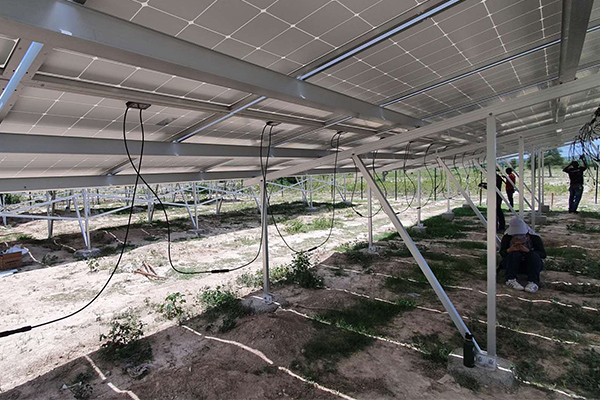
Ground solar racking systems are essential structural frameworks designed to support and secure photovoltaic panels on open land, serving as a core component of terrestrial solar power generation projects. Unlike rooftop solar mounting solutions, these freestanding structures are independent of buildings, making them ideal for large-scale commercial, utility-grade, and rural solar projects with available land resources.
Typically constructed with high-strength anodized aluminum or hot-dip galvanized steel, the systems feature excellent durability and corrosion resistance, ensuring a service life of over 25 years. Their basic components include vertical support posts, horizontal beams, and diagonal reinforcing braces. They are firmly anchored to the ground via driven piles, ground screws, or concrete ballasts, effectively resisting external pressures such as strong winds, heavy snow, and seismic vibrations to maintain stable panel operation.
One major advantage of ground solar racking systems is flexible adjustability. Engineers can customize the tilt angle and row spacing of solar panels according to local latitude, sunlight duration, and terrain conditions. This optimized layout maximizes solar irradiation absorption and significantly boosts power generation efficiency, outperforming fixed rooftop systems in energy output. Additionally, the elevated structure allows smooth air circulation beneath panels, reducing heat accumulation and further improving power conversion performance.
Adaptable to diverse terrains including flat land, gentle slopes, and industrial brownfields, these racking systems support scalable installation from small distributed arrays to large solar farms. With reliable performance, low maintenance costs and high energy efficiency, ground solar racking systems have become a mainstream choice for promoting clean energy development worldwide.