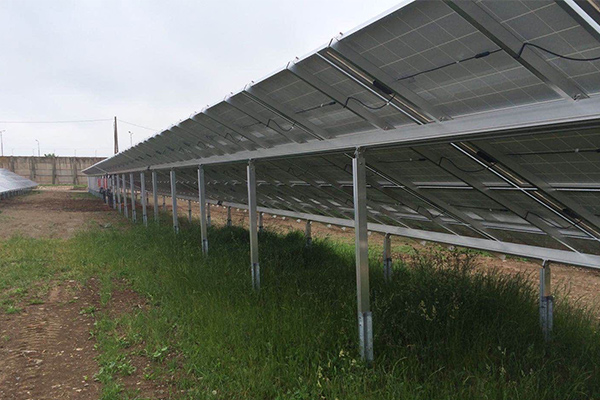
Ground solar racking systems serve as the foundational framework for utility-scale and commercial solar installations, merging structural stability with energy optimization to maximize photovoltaic (PV) performance. These engineered systems are tailored to diverse terrains and climatic conditions, making solar energy more accessible and efficient globally.
The three primary system types cater to varied needs and budgets. Fixed tilt systems, with their concise structure and minimal maintenance requirements, offer an economical choice for long-term installations . Single-axis trackers enhance efficiency by rotating panels along one axis to follow the sun’s daily path, delivering 15-30% more power than fixed arrays . Dual-axis systems take precision further, adjusting to both horizontal and vertical solar movements for up to 40% higher generation compared to fixed setups .
Modern racking systems boast robust design features. Constructed from 6005-T5 aluminum alloy and SUS304 stainless steel, they resist corrosion and endure extreme conditions—withstanding wind loads up to 60 m/s and snow loads of 1.6 kN/m² . Pre-assembled components and modular kits eliminate on-site welding and cutting, slashing installation time while ensuring millimeter accuracy . Height-adjustable rails adapt to uneven terrain, maintaining optimal panel alignment .
Beyond structural integrity, these systems boost energy output through smart design. Elevated mounting improves airflow beneath panels, reducing temperatures and enhancing efficiency on hot days . Accessible ground-level positioning simplifies cleaning and maintenance, preventing efficiency losses from debris buildup . Their versatility supports both framed and frameless modules in portrait or landscape layouts .
Future innovations promise greater advancement. Hybrid carbon fiber-aluminum structures will reduce weight while increasing strength , and AI-driven tracking systems will use real-time weather data to optimize positioning . As renewable energy adoption accelerates, ground solar racking systems remain pivotal to unlocking solar’s full potential, balancing cost-effectiveness with sustainable performance.