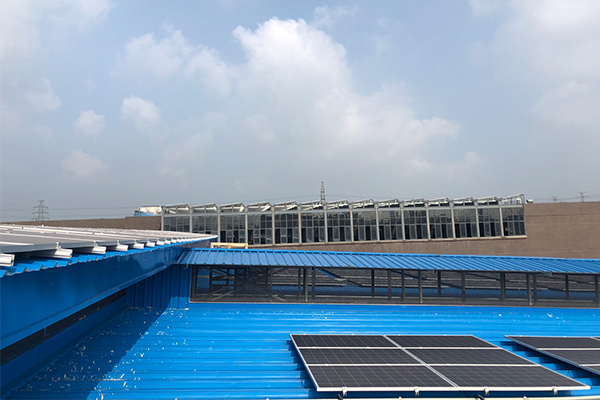
Solar mounting structures are core supporting components for photovoltaic systems, which fix solar panels at optimal angles to capture sunlight efficiently. Different installation environments, terrains and project scales require targeted mounting structures. The mainstream types on the market are mainly divided into roof-mounted, ground-mounted, and tracking solar mounting structures, each with unique features and application scenarios.
Roof-mounted solar structures are the most widely used for residential and commercial buildings. They are designed to fit flat or sloped rooftops with lightweight and compact designs. Made of aluminum alloy usually, they cause no damage to building roofs and save land resources. This type is easy to install and cost-effective, ideal for distributed solar power generation on factory buildings, villas and office rooftops.
Ground-mounted structures are applied in large-scale solar power plants. Fixed on open ground, hillsides or wasteland, they adopt sturdy steel or aluminum brackets to ensure stability against strong winds, rain and snow. With adjustable installation angles, they can maximize solar energy absorption. Though occupying certain land area, they feature high bearing capacity and long service life, suitable for centralized photovoltaic power projects.
Solar tracking structures are the most advanced type, including single-axis and dual-axis trackers. They can automatically adjust the direction and angle of solar panels following the sun’s movement. Compared with fixed structures, they improve power generation efficiency by 20% to 40%. Despite higher costs and more complex maintenance, they are increasingly popular in high-efficiency solar projects.
In short, rational selection of solar mounting structures based on actual conditions balances project cost, stability and power generation efficiency, supporting the stable development of the solar energy industry.